The Human Mosaic -Writing Characters
I have written this myself. The words and ideas are all mine. But I have used Copilot AI to do the maths, to search out the bits it would have taken me months to find myself and to suggest how to put some things in order.
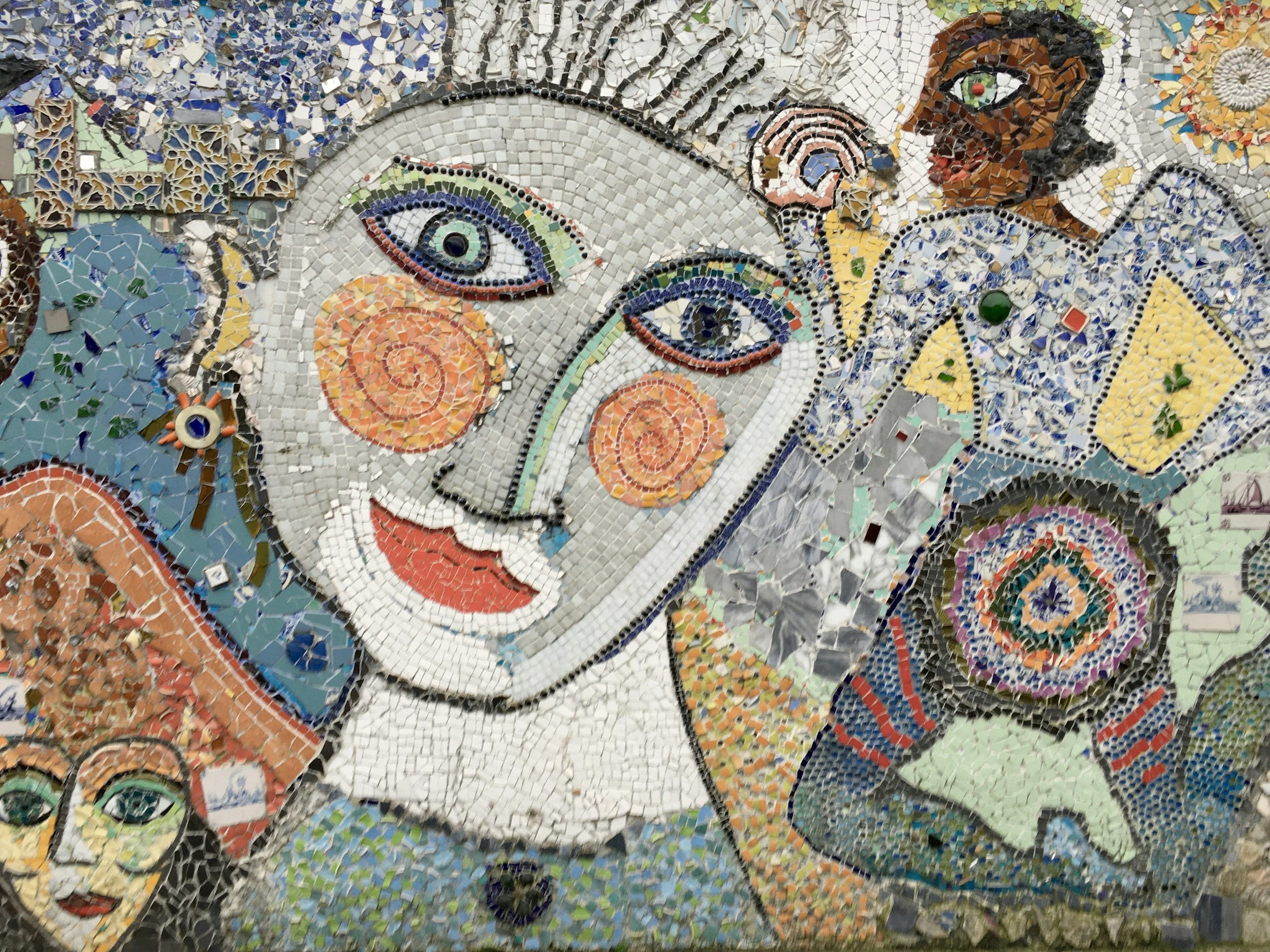
Mosaic by Isaiah Zagar, Photo from Unsplash.
As a playwright with some 50 plays performed round the world and a list of characters stretching away into the many, I have, naturally, always been intrigued by the question of how I can construct or describe characters for actors to perform in authentic, believable ways. I have come to the opinion that characters are made up of a bundle of traits and behaviours that demonstrate or mask their true identities. People are unbelievably complicated. And the older I get the more I realise how this is true for individuals in the real world as much as for characters in plays. We are all different because we are all made up of different bundles of these various elements. But are there enough variations to describe everyone or are we all on Rinse and Repeat? How many exact doubles do you have in the world? Can we Playwrights only produce stereotypes of characters that someone else has written about over the last 2000 years or so?
So I asked AI (Copilot) to do some maths: How many traits would it take for everyone on earth to have a unique character? And by extension how far could that be extended to everyone that has ever lived?
The answer surprised me. Working with a scale of three (strong expression, situational or moderate expression, weak or absent expression) Copilot came up with the answer that it would only take 26 traits to theoretically generate more unique profiles than there have ever been humans. The formula is quite simple: 3 to the power of 26=2,541,865,828,329
That is over 2.5 trillion possible human profiles. Plenty to go round.
How could just 26 character traits be enough to describe all human beings? We looked at 5 headline character domains (Cognition & Orientation, Emotion & Temperament, Social & Interpersonal, Values, Drives & Identity and Sensory & Embodied) and divided them into the obvious traits. (And please remember this is still a thought experiment, I have not actually analysed everyone who ever lived but it seems to hold together reasonably well for these purposes.)
This is the list I came up with Copilot help: (some of the Copilot suggestions were quite poetic)
I. Cognition & Orientation
1. Curiosity
The drive to seek, question, and explore. High curiosity pulls a person toward the unknown; low curiosity keeps them anchored in the familiar.
2. Abstraction
The ability to think in concepts, patterns, and ideas rather than concrete details. High abstraction sees systems; low abstraction sees specifics.
3. Pragmatism
A person’s instinct for practical, real‑world problem‑solving. High pragmatism acts with what’s available; low pragmatism gets stuck in theory.
4. Purpose
The strength of a person’s long‑term direction. High purpose is goal‑driven; low purpose lives in the present moment.
5. Innovation
The impulse toward novelty, experimentation, and change. High innovation disrupts; low innovation preserves.
6. Imagination
The richness of a person’s inner world. High imagination generates images and possibilities; low imagination stays grounded in reality.
II. Emotion & Temperament
7. Reactivity
How quickly and intensely emotions rise. High reactivity flares; low reactivity stays steady.
8. Affect
A person’s emotional climate — warm, neutral, or cool. High affect expresses; low affect withholds.
9. Empathy
The capacity to feel into others’ experiences. High empathy attunes; low empathy struggles to read emotional cues.
10. Restraint
The ability to pause before acting. High restraint regulates; low restraint reacts.
11. Sensitivity
How deeply stress, criticism, or threat is felt. High sensitivity absorbs; low sensitivity deflects.
12. Resilience
A person’s ability to recover from setbacks. High resilience rebounds; low resilience lingers.
III. Social & Interpersonal
13. Expression
How readily a person shares thoughts and feelings. High expression opens; low expression protects.
14. Sociability
A person’s orientation toward company. High sociability seeks people; low sociability seeks solitude.
15. Trust
A person’s default stance toward others’ intentions. High trust assumes goodwill; low trust assumes risk.
16. Assertiveness
The instinct to take space, lead, or direct. High assertiveness pushes; low assertiveness yields.
17. Generosity
The willingness to give time, resources, or care. High generosity offers; low generosity withholds.
18. Attachment
How deeply a person bonds and seeks closeness. High attachment connects; low attachment distances.
IV. Values, Drives & Identity
19. Acquisition
A person’s relationship to resources — money, status, possessions. High acquisition accumulates; low acquisition simplifies.
20. Independence
The need to act on one’s own terms. High independence resists control; low independence seeks guidance.
21. Scope
The breadth of a person’s moral circle. High scope cares broadly; low scope cares narrowly.
22. Agency
The drive to shape events rather than be shaped by them. High agency initiates; low agency reacts.
23. Identity
The coherence and stability of a person’s sense of self. High identity is anchored; low identity is fluid or fragmented.
24. Moral Rigidity
How tightly a person holds to rules and absolutes. High rigidity judges; low rigidity adapts.
V. Sensory & Embodied
25. Sensation
The vividness of sensory experience. High sensation feels intensely; low sensation feels lightly.
26. Daring
A person’s willingness to step into risk or uncertainty. High daring leaps; low daring avoids.
So it looks as though we can build a system that could describe every human who ever lived individually. But no system can contain the lived experience of even one human life. That is where Behaviour has its effect. Traits are baked in (or relatively stable, at least) but behaviours can be learnt or simulated. ie where individuals do things which demonstrate that trait or is against their true nature. What we in the trade call masking. For instance, a naturally timid person suddenly bursts out with an act of heroism, or where a greedy person suddenly performs an uncharacteristic act of generosity. You get a lot of that in plays. This is where characters in dramas get really interesting. AI came up with a system for describing that.
Alignment
Trait and behaviour match. The person is acting “in character.”
Tension
Trait and behaviour partially mismatch. The person is masking, struggling, or adapting.
Conflict
Trait and behaviour fully contradict. The person is acting against their nature.
Of course, if you are writing a play, I would advise against using this as some sort of Lego Character Builder Set (There are no rules in playwriting. You write what you want to write, how you want. Not according to my fancies.). But it might be an amusing way of describing your characters or looking for a way to indicate how they might behave under different circumstances. IT IS ONLY A THOUGHT EXPERIMENT and is an attempt to describe not proscribe. You will find lot of other ways of describing characters and behaviours but perhaps you could use this as a sort of Character Thesaurus where you might crystallise your thinking.
Has Anyone Tried this approach before?
I also asked if anyone else had asked this sort of question. And, again, I was surprised to find that nobody seemed to have come at it from this angle.
There is no existing system that does what I’m trying to do. At least, not in a way that could be said to draw from psychology, philosophy, dramaturgy, and anthropology and which boils it all down to a 26 point system.
Here are some instances CoPilot found for me (And I did come across a lot of these in college)
Psychology’s Attempts at Mapping Human Traits
The Big Five (OCEAN)
Openness, Conscientiousness, Extraversion, Agreeableness, Neuroticism. The dominant scientific model — but extremely broad, only 5 dimensions, and not designed for narrative or philosophical depth.
HEXACO Model
Adds Honesty–Humility to the Big Five. More nuanced, but still only 6 traits.
Cattell’s 16PF
Sixteen personality factors derived from factor analysis. Closer to what I’m doing here, but still statistical, not conceptual.
Eysenck’s PEN Model
Psychoticism, Extraversion, Neuroticism. Very narrow, very biological. (And Eyesenk is largely discredited these days)
Cloninger’s Temperament and Character Inventory
Novelty Seeking, Harm Avoidance, Reward Dependence, Persistence, etc. Touches motivation and temperament, but not identity, morality, or imagination.
These are psychological tools, not human taxonomies. None of these systems attempt a full philosophical map of human nature. So let’s have a look at what the philosophers have said:
Philosophy’s Attempts at Human Classification
Aristotle’s Virtues and Vices
Courage, temperance, generosity, etc. A moral map, not a personality map.
Spinoza’s Affects
Desire, joy, sadness, and their derivatives. A brilliant emotional taxonomy, but not a full trait system.
Nietzsche’s Drives
Will to power, ressentiment, creativity, self‑overcoming. Deep but not systematic.
Kant’s Anthropology
Observations on temperament, character, and moral disposition. Fragmentary, not a structured system.
Existentialists (Sartre, Kierkegaard, Heidegger)
Freedom, authenticity, anxiety, despair. Philosophically rich but not trait‑based.
So where Psychologists were trying to give structure, they weren’t providing depth. Philosophers, on the other hand were giving depth, but not structure. So what about any other systems?
Literary and Dramatic Systems
Jungian Archetypes
The Shadow, the Anima, the Hero, etc. Symbolic, mythic, but not granular.
Campbell’s Monomyth
A narrative arc, not a personality system.
The Enneagram
Nine “types” with wings and subtypes. Useful for storytelling, but mystical and not comprehensive.
Character wheels used in screenwriting
Desire, fear, wound, mask, need. Focused on drama, not human universals.
These do have tools for creating characters,but not for understanding people.
And here’s a couple more :
Sociological and Anthropological Approaches
Hofstede’s Cultural Dimensions
Individualism, power distance, uncertainty avoidance, etc. Applies to cultures, not individuals.
Moral Foundations Theory
Care, fairness, loyalty, authority, sanctity, liberty. A moral map, not a personality map.
In the end, how does our 26‑Trait System compare with these ideas?
more granular than psychology
more universal than philosophy
more human than sociology
more precise than literary archetypes
more flexible than typologies
more comprehensive than any existing trait model
So, I feel I’ve accidentally come up with something they didn’t: a unified, multi‑domain map of human nature. How cool is that?
If you are thinking of having a go at trying to understand characters in your own way these are the thinkers whose work resonates most with what we’re building here and might be worth a bit of research. Thanks to CoPilot for the suggestions. I will definitely be following up with the ones I haven’t read before.
Aristotle (virtue ethics)
Spinoza (taxonomy of affects)
William James (varieties of human temperament)
Carl Jung (deep structures of personality)
Erik Erikson (identity and development)
Cloninger (temperament + character)
Isaiah Berlin (value pluralism)
Martha Nussbaum (human capabilities)
Let me know how you would go about building a system like this for your writing. Or do you just bumble along as I do most of the time?