The Burning Stage #2 The Stage
Let’s start with the stage
This is a stage:

This also a stage:

Some stages are high:
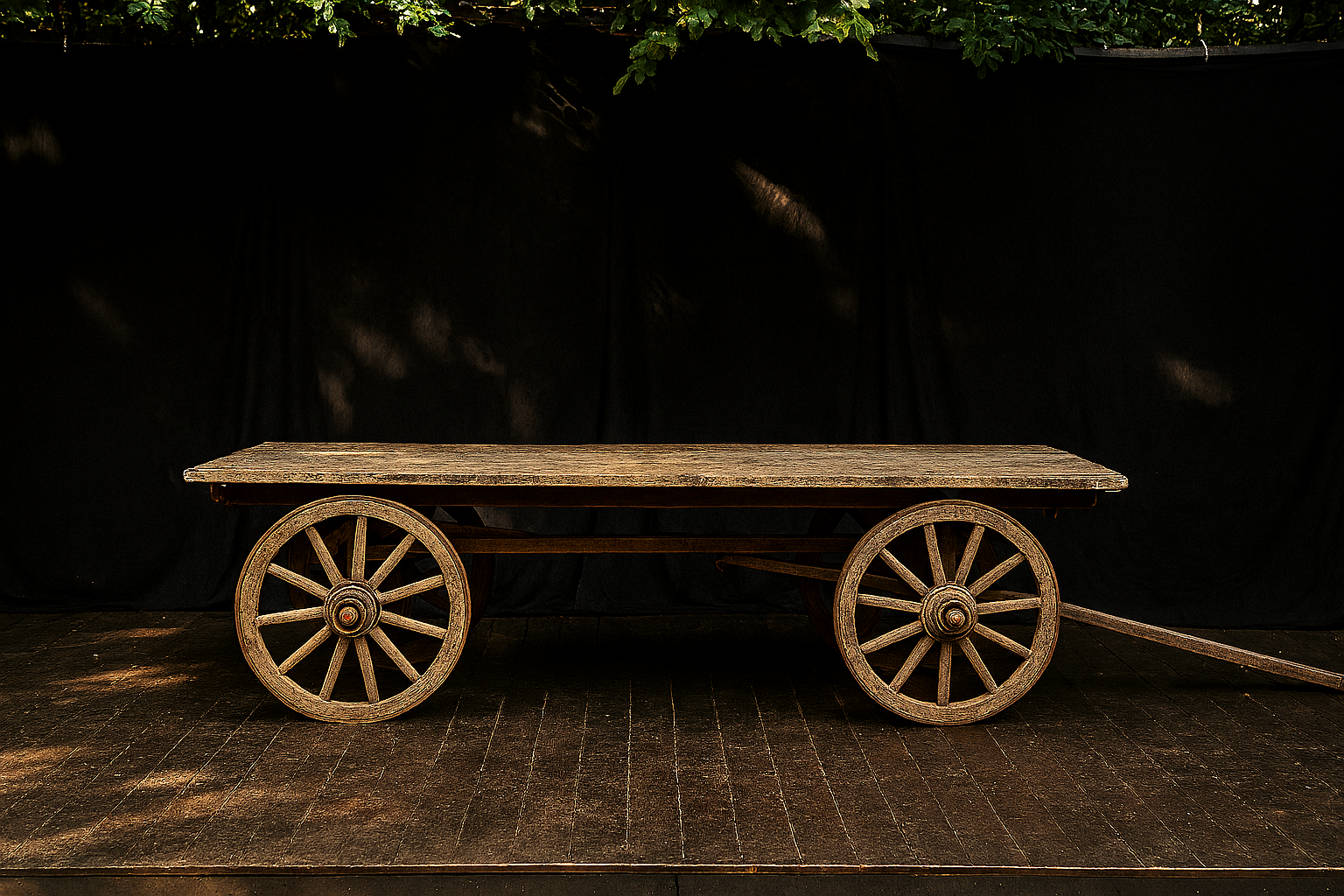
Some stages are low:

Some stages are impromptu and ephemeral
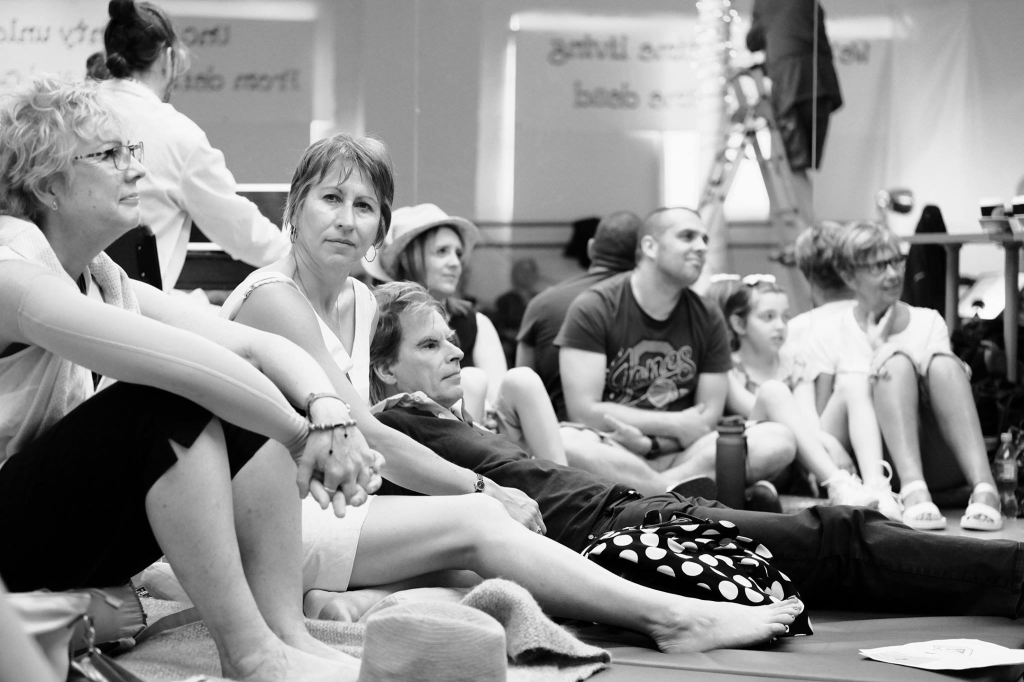
All stages are special. They are delineated by the needs of the audience. They require deep respect because they are a place where the most fundamental human interactions take place.
Stages can be all sizes, but, I think, the Burning Stage dictates a natural, human scale. Once you get to a stage that is wider than SIX people laid end to end or a circle more than EIGHT people in diameter then you have an arena. Arenas are for spectacles. We are not interested in chariot races or The Last Night of the Proms here. So we will leave Spectacles with their flashy effects and star names on the posters to one side.
There are two ways of experiencing a stage. A stage is a place for people to act. But it also belongs to an audience. The audience apply their mental processes whilst the actors supply their physical presence. A stage without an audience is as pointless as a stage without actors. The audience and actors own the stage fifty/fifty . The business of the stage becomes a compact between actors and audience. An understanding between them. It is almost a conspiracy where they both want to will a drama into being. This is what Samuel Coleridge Taylor called “Suspension of disbelief.”
The stage, the actors and the audience together, amount to one of the oldest art forms. And probably originates with a story recounted in the very earliest days of our ancestors, perhaps when fire had first been tamed and they could sit around in the circle of warmth listening to a warrior back from a hunt or a shaman who had journeyed far into the land of dreams. It was a social space where stories were told and ideas were exchanged. And I would emphasise the social aspect of that interaction.
Sometimes it is the audience who create the stage themselves.
You can see it when a little group forms round a performer in a street or shopping centre.
Sometimes an audience gathers when some public event occurs such as a road accident. In this case the audience will assemble across the street. They will be more than 6 people-lengths away. So this becomes a spectacle. An audience does not participate in a spectacle. They merely watch from afar.
If someone collapses with a heart attack in a public place, some passers-by will gather closely around. This is because they believe they may be able to help. They are participating. This is drama.
Whilst sharing our stage, the audience needs to be close enough to the actor to hear and see clearly. Actors need to be able to share with the people in the audience without artificial reinforcement. Microphones and headsets have the effect of signalling that the actor has primary importance and needs to overwhelm the audience. That is a power gradient. I don’t like power gradients. Actors need to speak up if they can’t be heard.
In performing spaces it is best to allow a good arms length between audience and the stage because people sometimes come with bags of shopping and umbrellas with which they encroach on the acting area.
However, the crucial thing is that the audience can see beads of sweat on the actors brow, feel the warmth of their bodies and experience the less than pleasant odour that surrounds them. They feel emotion through the strong empathy humans have for one another. The performance is always visceral. The closer the audience is to the actor, the more directly they feel the emotional torrent. The event is a dream within reality. The dream is always in the here and now.
I have read thinkers who consider the drama equates to a religious experience. This may or may not be true but I think drama does fulfill a similar need to explore the Other. However, I think on the whole religious events are more akin to Spectacle with their reliance on costume, ritual and their distancing effects.
How the Stage Works for the Actor
I once shared a stage with a very famous and venerable actor called Michael Mac Liammoir. His stage was an old carpet with a few pieces of furniture on it. He walked about this small area entirely at ease with his material. Few people in the audience could tell that Michael was, by then, completely blind. His stage was so familiar to him that he had it pictured exactly in his mind’s eye and could come and go with confidence, picking up props and sitting in the big chair. This is how familiar a stage should be for an actor. It is their home from home; a personal space where they can share their deepest emotions. Or portray emotions so thoroughly that the audience members are drawn in and share those feelings themselves. The actors rely on the empathy of the audience so the space must be small enough for the audience to experience a real human interaction.
Actors on the Burning Stage wield enormous power. The emotional depths of the audience are easily stirred. The actor needs to be aware of this. They should realise that they are using the power of empathy for the sake of the audience not as a means of aggrandising themselves.
There is a way in which the Burning Stage has an almost religious feel and function. Because the stage belongs to so many people, it needs to be treated with reverence. When the actor steps onto the stage they cease to be themselves. They become something else, an animal, a bird, a god, Hedda Gabler or Othello. The stage is the home to these things and the actor should take a deep breath or say a prayer before committing themselves to becoming one of their number.
The actor should experience the transition that occurs at the edge of the stage with the force of a torrent. They walk though a waterfall of change and instantly become the Other Thing . They may have learnt the words and movements of the Other previously but, as soon as they step beyond, they become it and what went before disappears. They have literally transformed and they are no longer who they once were.
I am not suggesting the stage is a religious place in a pious sense but it is Sacred. It is dedicated to the transformation that occurs there. The transformation of actor into another being. The transformation of the audience so that they are experiencing something new and alive. The Stage should be treated with respect and, once the audience have taken possession of it, no mortal should enter upon it without becoming the thing they are inhabiting.
I have come across quite well-known actors who were gibbering wrecks in anticipation of their roles but for whom all their fears dropped away as soon as they crossed the edge of the stage. Sir Laurence Olivier in his later career was prone to stage fright and was sick every time he had to go on. It is not for nothing that actors sometimes refer to “Doctor Theatre” as many have got through performances oblivious to quite serious illnesses and even broken bones.
For me, the crucial thing is that actors are seen and heard as human beings at human scale. This means that stages are best when small and intimate. This is only one step away from street theatre and stand-up comedy and is only different in that we are portraying dramas, be they comedy, tragedy or farce. And we are allowing time and space for the audience to focus on the interactions.
For this approach, I prefer to work in the round or in traverse. Here the audiences are aware of both the actor and the audience members sitting opposite. At the same time actors are conscious of their audience. They feel a personal responsibility for them. On a small, enclosed stage the actor is not constrained to perform facing in one direction. They face the natural direction of the interaction they are participating in. They can address the other characters as the action dictates. The magic then arises because the audience, in filmic parlance, call the shots. They are not compelled to look in any one direction. They are free to experience every detail of what is going on. There are no filmic close ups. Actor and audience are conscious of being in the same space together. And they are free to follow the fortunes of whichever character they choose to. In this way, understanding and emotions derive truthfully from the performance and is not imposed by the director.
In my direction, I always insist that the stage is treated with respect. There is a clearly delineated stage area. Maybe the size of a carpet or a drugget. Nobody walks here unless they are committed to their character. I describe the feeling they should experience when crossing the threshold like being struck by a lightning bolt. The performer should transform from actor to character in a split second. For this reason, the stage is kept clear except the very times when the characters are present.
One other advantage of small, intimate acting areas that I can do away with sound reinforcement. As I said before, Actors’ voices should be able to reach any audience member. Sound reinforcement produces another power gradient and you can imagine what I think of them.
How the Stage works for the Audience
There is something deeply satisfying when the lights dim on the audience and brighten on the stage. This enables us watchers to shift our focus onto the matter in hand. A portal opens and we enter into the same dream world as the actors where we allow our imaginations to run wild. It is a moment of sheer excitement of anticipation and joy as the event unfolds. The audience takes posession of the stage and for a brief time they share the moment with the actors. We both apply the same “imaginary puissance”.
Sometimes the audience literally owns the stage. This has certain advantages. When I was Artistic Director of Oxfordshire Touring Theatre we performed in every sort of space imaginable. On one occasion we were performing an adaptation of The Mayor of Casterbridge in a hall in a small Oxfordshire village. Half way through the lights suddenly went out and a voice from the darkness asked if anyone had 50 pence for the meter. For some reason one of the actors had some change in his pocket. He groped through the darkness handed over the coin and the lights came back on. The actors continued. The audience returned to the world of Hardy exactly where we had left off. The point being that the audience felt comfortable in their space. The lights going out was a regular feature and they thought little of the event. They were able to dismiss the incident because at that moment they wanted to continue with the drama. The portal reopened.
There is another sense in which the audience owns the stage. Unlike in films, they are free to look where they like and pay attention to whatever thread of the drama interests them. The actor at the front of the stage may be working hard but some of the audience will be following the reactions of that couple at the back. Audiences should be free to choose how to interpret what is going on without being emotionally coerced by the use of music or clever camera work or editing. Or narration.
Sometimes, it is difficult for directors and writers to leave enough room for the audience to make this contribution to the drama. They do not trust the audience to think and make choices for themselves. At the end of the performance there should be as many interpretations of what has been going on as there are audience members.
The thing I learnt from touring theatre was that stages can be a myriad of shapes and sizes and, provided they are still within people proportions, they will work for audiences who come with few preconceptions. As a director I enjoy working in Traverse mode. Here the stage runs through the centre of the audience with the audience facing inwards. So that, wherever the director places the actors, the audience have to choose which way to look. The effect can be rather like a deconstructed tennis match. But good fun.
I have even tried having the audience in the cenre of the action looking outwards to the action. Or having the audience distributed in random groups throughout the action. In fact anything that reinforces the relationship between the Stage and the Audience, anything that can provide an audience with a literal new perspective has got to be one of the aims of what we do. They can all work.
The form I enjoy most is theatre-in-the-round. Theatre-in-the-round seems to be the most fitting for drama. The most natural and the most human.Whilst watching any one actor, the audience cannot help but also frame the audience sitting directly behind. This adds a sort of feed back loop to their excitement. Audience and actors are clearly aware of each other. At the same time, there is no front and back to the action. Actors have to expose their characters to the full glare of the audience. There is nowhere to hide. The actor and audience are joined in some fusion of intent.