The Burning Stage #5 - Writing for the Burning Stage
How I go about it. In Seven drafts with Nine mind-blowing insights.
As I mentioned before, there are many different kinds of stages: village halls, outdoor spaces, concert halls.
My plays could end up on any one of these spaces. They get performed in odd parts of the world. I have no control on what they get up to in Bangalore or Montana or the suburbs of Sheffield
But whatever the environment, I must remember that theatre manifests in a sacred space where transformation occurs—not only for the characters in the drama, but, importantly, for the audience. A play that begins as a lowly creeping thing transforms into a butterfly with the work of the actors and the reactions of an audience.

One of the great transformations in the natural world. We hope for as much.
I’m not sure writing plays is a skill that can be taught. But it can be learnt. And it’s learnt by opening yourself up to the possibilities of the stage which are usually hidden from view. I don’t mean, the fripperies of lighting and sound and music – I mean the possibilities of actors being here and now with an audience that shares the same here and now.
The best way to learn is to watch and be with actors. Learn how they go about their craft. I was fortunate to begin my career as a stage hand in the West End. I literally leaned on my broom and watched people like Sir John Gielguid and Alan Bennet in rehearsal. I was there when Judi Dench auditioned for Sally Bowles in Cabaret.
And what did I learn? I learnt that great actors are not gods. They may play gods but they are human beings with all the trifles and anxieties of life surrounding them. However, on stage with words given to them, they can leave all the nonsense behind. They bring their humanity with them but they lean on the writer to give them substance.
Lighting the flame - The Genesis of The Play
It’s as if I’m walking through a dark forest at night and I see a distant, flickering light. This picture repeats over and over to me. I come across a group sitting round in the glow of a fire. In the space between a group of actors are performing, casting shadows in the firelight. It is a moment in which I catch a glimpse of The Play as it might be.
I start with a stage picture. A vision. A moment that sums up my initial idea. During the writing process, the play is going to be pushed and pulled by the characters and situations I create. I may have only a hazy idea of how the play will come out but I need to find that kernel. That moment that sums up what is to occur. A moment from a scene. It may be a phrase or even a smell or taste. Maybe a snippet of conversation I’ve overheard somewhere.I try to imagine that as the still heart of the play with the characters and actors. Even if I don’t know who these are yet. But I will try to imagine the sort of group that might be performing or imagine particular actors. If I’m working to a commission then a great deal of stuff will have gone to funding bodies and marketing people before I even begin work, so this stage picture will be my waymark. It will be what I describe to prospective producers. And as I progress, I find it easy to lose focus and to get lost in the weeds. This image becomes a mental post it note or old photo pinned to the screen of my pc to keep me on track.
Someone once said that when you’re writing for the stage you start with the poster and work back from there.
Insight #1
The Eternal Fiery Triangle
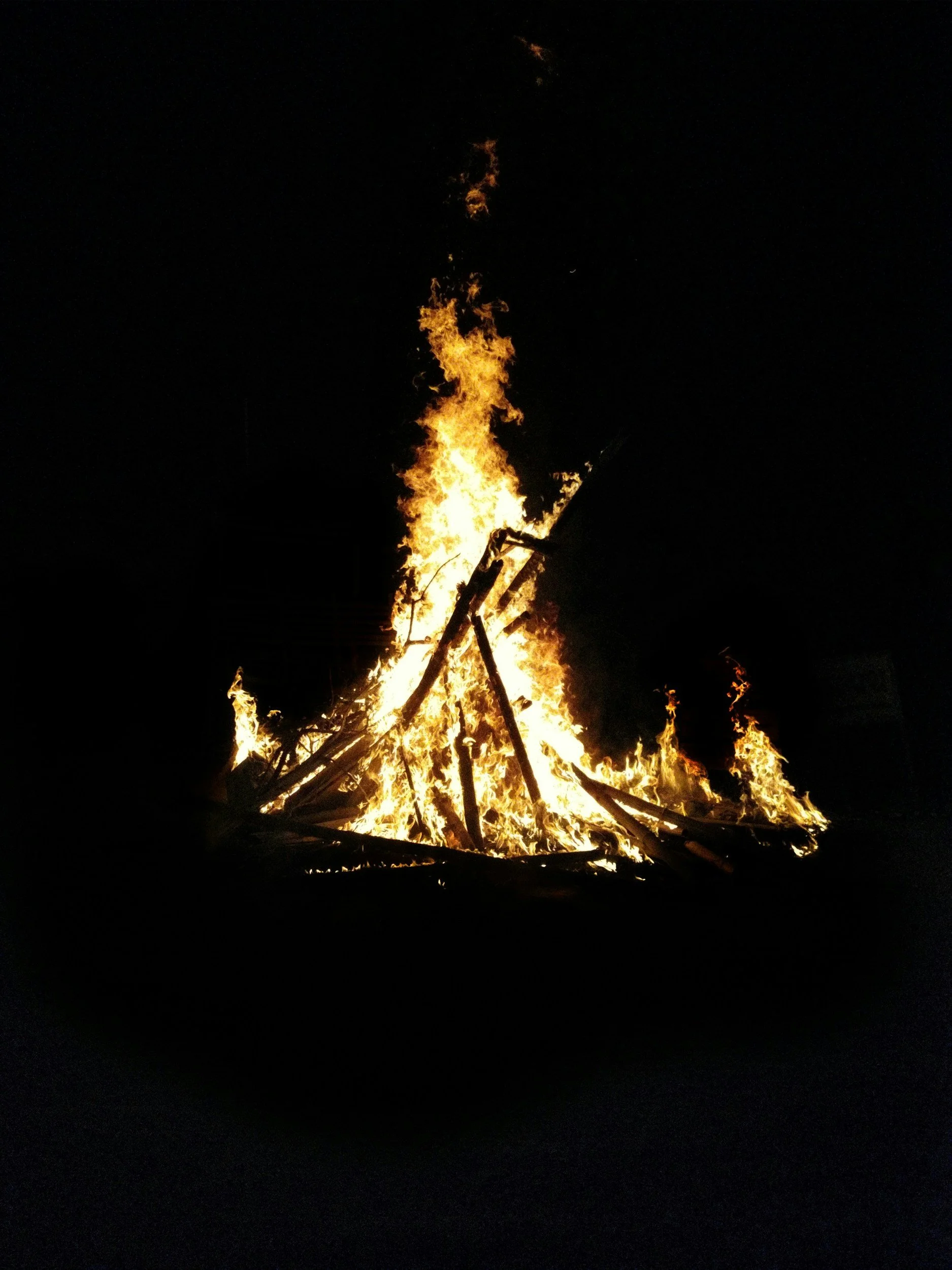
There are three elements in witing for the stage that are universal. The eternal triangle, if you like. Writer - actor - audience. They all share the responsibility for bringing this play to life and giving it meaning. As a writer I must always bear in mind the living presence both of the actor and of the audience. I must respect their contributions to what I am trying to achieve. They are both present on my desktop as I am constructing my play as much as my pc and dictionary. My contribution as a playwright is only a third of the finished piece. I am not even there when the actor and the audience contribute their parts to the performance. The actor contributes their physical presence, their experience of the world which enables them to interpret what I have written. And they will have spent many hours delving into this in the rehearsal room. The audience brings their understanding and perception of what is happening at this actual moment and how they feel about it. Plays depend on process. Different actors = different manifestations of character. Different audiences = different interpretations.
I cannot control everything. And, really, I shouldn’t try
As a playwright I try and recreate a world in which the audience will suspend their disbelief in what they’re seeing for an hour or so and within that, their experience becomes totally real; exactly as if they were witnessing something that happened to them personally on their way here. And their experience will be quite different from the person in the next seat or at the next performance. They may have struggled in out of the rain and dumped their shopping on the front of the stage. During the performance They will be flicking their eyes from here to there. Taking in peripheral details like exit signs and someone coughing. But even if they’re concentrating properly, they may not necessarily be concentrating on the actor at the front of the stage or the one speaking. They may even be distracted for a moment by a noise from outside and may miss a whole chunk of exposition. But the human brain is a wonderful thing and it will try to make some sort of sense of what is going on even if that is quite at variance with what I originally intended. The words I write and which the actor speaks will resonate differently with every person. The crucial element is that what they see is immediate and ephemeral. There is no turning back the pages to check a clue to the puzzle There is no guidance by camera work or editing tricks. They see and understand what is in front of them. For an hour or so we all share a space and an experience, but the result will be different for us all.
I must Trust my audience as a colleague, a collaborator. They will make be the ones who make sense of this play in whatever way they can. I want them to be part of what is happening. I don’t mean I want them to get up out of their seats and participate in the drama but I do want them to be engaged emotionally, spiritually, mentally. I want them to be able to challenge what they see. I want them to be affected and feel changed in some way. I will try to avoid throwing a soulless spectacle at them or, much less, a lecture where all they have to do is to sit back and let it wash over them thereby missing the very humanity of what we’re about. I also need to remember that at no point do the audience know what is to happen. As a writer I am creating an edifice that the sudience know nothing about. They know nothing of the hidden staircases you will reveal, the sweeping lawns, the claustrophobic dungeons or the heady parapets on the roof. You reveal all the features to them piece by piece and if something shocks them as you round a corner, their shock will be genuine. For the sudience, the edifice is entirely real and immediate.
First DraftIn The first stage of the writing process proper I begin assembling bits and pieces that will form the matrix of the play. This is sort of equivalent to a designer’s mood board. There is no average time for this and it may be months before I begin writing seriously but all the time it will be churning away in my subconscious and I will be picking up odd bits and pieces of inspiration. When I have got this jumble of material into some sort of order I find I have got enough for the project to go critical. This the first draft.
Insight #2
Plays are NOT Literature
Plays are not written to be read. They inhabit a different space from prose or poetry. Or even monologues or songs. This peculiar shared space is immediate and almost drunkenly Dionysian. My words are a series of hints and nudges to an actor to enable them to create characters in situations where those characters can carry my ideas to an audience, Writing a play is a largely technical exercise more akin to architecture than to poetry.
As a playwright I have to bear in mind at all times the fact that I am only contributing a third of the playmaking process. I am only one side of a triangle that is completed by the actor and the audience.
A drama is formed by an interaction between characters in an environment. The environment is made up of the framework of choices that I present the audience through the agency of the actors. That interaction is manifested mainly through speech because that is the principal form of communication of humans. The speech of a play we like to call dialogue. Dialogue functions not so much through the meanings of particular words but through its implication – what students of language call “implicature” – a hidden code that is understood by the context it occurs in. But dialogue has separate functions for the actor and the audience. For an audience the dialogue unrolls around them in a breaking wave. But I must structure the dialogue so that it is clear to the actor what the intention of the piece is. I am speaking to the actor through the dialogue. And through them to the audience. The actor and the audience are, as it were, just as present on my desk top as my dictionary. They are ever present. The actors have to know what the Intention of the piece so that they can then transmit this step by step to the audience. I help the actor by defining the environment where the interactions of characters take place. Not the physical environment; that is the job of the designers and directors, but the dramatic space constructed out of the choices I make in the dialogue.
I don’t need sit here at my keyboard and tell the audience things in the way they might need watching a film or reading a novel. Exposition and description are superfluous. Exposition lies in the head of the actor. They will have spent their time in rehearsal teasing out a backstory that fits my words and which enables them to colour the words they speak. Thus, I do not have to clumsily describe the time and space (“Hello, what are you doing here in crumbling and draughty Blackwood Manor on the remote Yorkshire Moors at three o’clock on a rainy Tuesday afternoon? And why are you pointing that gun at me?”) The audience can see all that for themselves. They can experience all that in an instant. Any exposition is contained within the Intention of the actor. They know where they are and why they are here. They ARE the character in that moment.
Similarly, I avoid physical description of the characters. Physical presence is what the actor contributes. Characters can be assumed by actors of all ages, sizes and dispositions. And as long as they follow the path I have laid out, they can walk it in whatever manner they find appropriate. Thus, I allow the actor to bring their own self and skills to the part and, in this way, challenge them to find something new; something more than the written dialogue. I am opening a conversation with the actor and allowing them to contribute to the finished work.
And by doing this I am also beginning a conversation with my audience. And like any conversation in the real world at a bus stop or in a café it will be disjointed and puzzling to the outsider who is not actually present in that time and place. In other words, the disinterested reader of a script. As much as possible I will leave aside good literary conventions of clarity, conciseness, and structure. In co-operation with the actors I am creating moments in the here and now just as moments are created in the real world. These are messy, ill defined. The only difference being, that they are chosen by me and it is the choices that define the moment. The difference with a novel, say, is that in there the past is contained in the reality of the printed words. We can turn back the pages to find the clue we missed. We can rerun a video countless time to wring out every bit of emotion we are being fed. In a play that emotion is gone in an instant. What might elicit tears in one performance might equally bring laughter in another. A play has no existence outside the moment. It is here and gone. Any attempt to recapture that fleeting moment by reading a script is to discover a poor, sorry thing that has no real meaning.
The audience inhabits a space that is immediate and entirely of this moment. The actor has to pretend they have no idea what is happening even though they have carefully planned it over several weeks of rehearsal.
I am creating a moment, a series of moments. A giant hoax with only the actors in on the joke. Literature? No. I am using artifice to reach out and create a create a moment of reality with a group of individuals that finds themselves in a world where it is increasingly difficult to sit down in communion together.
The nearest thing I can think of to what I contribute to the play making process is that of the architect. I will not be living in this edifice in the way the actors and audience will be. I am designing and assembling a moment, a series of moments, made up of speech, characters and intentions. The moment of performance is made by the interaction of actor and audience. I am not even there when the performance takes place. Over the past year my plays have been seen in Bangalore, India, in Montana in the US and in Rochdale. I have no way of knowing how any group of actors or audiences are going to find truth in my words. I just hope they enjoy their time together.
Second DraftThen I copy this to a new file tand begin to join all this together with strings of dialogue or outlines. I begin to see the characters and situations emerging out of the mist. At the moment a lot of this is just place holders but from this emerges the characters and situations and by playing with it I have the sketch of the play. I may at this stage write a sort of place holder first scene, just to see if the ideas make any sense. This is the second draft.
Insight #3
Dialogue is NOT Speech
A drama is formed by an interaction between characters in an environment. That interaction is manifested mainly through speech because that is the principal form of communication of humans. The speech of a play we like to call dialogue.
In order to understand how to make convincing, understandable dialogue, connectable with an audience, the playwright needs to be able to understand how conversation is made in the real world.
I was very bad at dialogue. It took my long years of listening in to conversations in cafes and on buses to begin to piece together how people react together as they are speaking. I came to realise that dialogue is not in any way coherent or thought out. It is an interchange of a series of chopped phrases culled from everything the speaker has gleaned from elsewhere. Most people have a storage bin of words and phrases that they can trot out whatever the circumstances smooshing them together to make sounds that are vaguely relevant. Consider how AI works by hoovering up all the words from the internet and smooshing them together to make something apparently relevant. That is exactly how we speak, jumbling together odd words and phrases we have heard on the news , gestures and sounds that may or may not have some relevance to the conversation.
The technical way of describing this is to think about speech being made up of inputs which are little pre made phrases or utterances rather than words..As such a dialogue is seldom preplanned. We may know what we want to say but it seldome comes oout in any coherent way.
But that’s a whole other topic I’ve written about elsewhere. Stephen Pinker says that language is innate in humans. But he doesn’t say what form that language takes.
Any conversation is seldom an exchange of information and is really a way in which individuals groom each other socially establishing hierarchies and validations of their existence.
When we engage in a conversation, we have a contribution to make and we spend the rest of the exchange trying to get it round to where we can put in the nugget of information that we have gleaned from elsewhere and which we have take n as our own. Listen how often people in conversations say “Ye, ye, ye. No. Ye. Yeah” as they wait to get in their nugget of knowledge.
Insight #4
Speech does NOT contain Meaning
So, in dialogue, although I am writing in words. It is not the words that contain meaning. Meaning as defined by the OED is the “intended sense of a person’s words”. Meaning is conveyed not by the words themselves but by tone of voice, context and the way the smoosh is pulled out from the brain bin. The actor needs to pick up my drift, understand the context and imply the meaning themselves through their gestures and actions. It’s the exchange of musical melodies.
Two characters making statements at each other, or posing questions and receiving coherent answers is neither convincing nor very interesting. What I have to do in my writing is to Imply meaning. Come at it sideways. Talk about anything apart from what my characters actually have buried in their hearts and is bursting to get out. The actor needs to pick up my drift, understand the context and imply the meaning themselves through their gestures and actions. Meaning is carried through tone and modulation more than the words. What generates that is context. The actor must decide to say a particular line sincerely or ironically. They key for the actor is the thread that weaves its way through the piece as a manifestation of character. The words are only vehicles for the intention of the character.
If you want to think about this some more, find a digest of the work of Paul Grice who talked about speech being a cooperative enterprise. (“I’ve run out of petrol.” “Ok. There’s a garage just down the road.”) are, on the surface, completely unconnected statements but they have a contextual meaning that is clear to anyone taking part. This, Grice calls Implicature. And by making the characters follow this process, I can expect the audience to apply the same cooperative principal to understand what I’m aiming at.
All dialogue will contain implicature and I need to be clear about the character’s intention. In other words: where they are expecting to end up and what goals they are expecting to achieve at any one moment in the drama.
And if a character is going to lie and I want the audience to know it is a lie, I need to show evidence of that lie. I need to imply the contradictions in what they do and say.
Third Draft: Every time I work through and I make substantial changes, I save to a new file and call that the next draft. Because I have to make a continuing thread for an actor to follow, I must always be moving in the direction of the drama. Every day, my first task is to read through starting from the beginning. And by read through, I mean exactly that – reading it out loud. I must always think of it as a play, not an extended piece of prose. This way I will pick up the non sequiturs and find the places where an idea has to be planted or a character has to be given some information before it becomes apparent later on in the play. I am like God laying traps for the actors.
I did once have to write a play completely back to front. I was commissioned to write a play about Thomas Hardy’s first wife, Emma. I knew what the end was and then I had to construct a play that fitted that end. The process was the same, just backwards. That is now the Third Draft.
Insight #5
“The characters you remember long after you have forgotten the story” - to quote an advert
A play consists of characters interacting together in an environment. The character is everything. It is what the actor clings to, of course. And it is the way the audience follows the action. They experience the situation through the characters. Interestingly, the audience may feel sympathy with any of the characters you create and not necessarily with the ones with the most words or who is central to the story. For this reason there must be enough room for an actor to form that character out of the clay I have provided. I never think about describing characters. Because I may not know anything about how an actor may see and interpret what I have written. My characters are defined by what they say and the contexts I put them in but they are made flesh by the physical presence of the actor..
A character is a bundle of motivations.
Motivation is an overall set of cultural and social beliefs modified by the moment we are in.
These motivations are wired in so that even the character themselves is not aware of them.
In a drama, not all these motivations can be shown but they need to be there. Or, at least, the possibilities of the whole bundle must be allowed for, because every one of them will have some bearing on the characters choices and progress through the drama. But I must be aware of, at least the significant ones, and the actor will spend many enjoyable hours teasing them out,
There are as many combinations of motivations as there are individuals on earth.
Draft 4 So in draft 4 I’m playing with the characters, stretching and bending them to see what their possibilities are. At night, if I’m lying awake I like to take one or two of my characters for a walk to see how they react outside the circumstances of the play. This is a particularly useful exercise if I am writing about a real life Person. I used this technique a lot when writing my play about Mary Anning. I could see how much more she was than a Hollywood heroine. She must have been unbelievably tough and muscular. She must have been immensely resourceful to have persuaded the labour force to come with her along the wind swept rain lashed beach at Lyme Regis to carry her fossils home. It took one visit to Lyme Regis on a wet day to give me the key to Mary Anning. So context gives me a key to the characters. The more I dig into the characters, the more I find out what the play is about. This is Draft Four.
Insight #6
The Car Crash
I can see little dramas everywhere I go, every day I step outside. Some event may happen – two cars nudge each other at the traffic lights. People gather round trying to understand what is going on. Perhaps even eager to participate by directing traffic or phoning for an ambulance. I see people arguing at a bus stop. Watchers form a circle at a respectful distance in case they get dragged in. A child sobs on the pavement because she can’t have an ice cream and her mother becomes flustered and embarrassed. People walking along a pavement step aside to let a disabled elderly gentleman past. These are the real, interactions of a world where people come and go and have to acknowledge or avoid others we live alongside. These interactions are continual and, for every one of us how we react to these situations is a clue to our own characters. So I need to think about each scene as a series of interactions.
Fifth Draft Somewhere about draft 5 I have smoothed the play into coherent shape and consistency but I’m frankly getting bored with it. It’s too bland. The story has no power behind it. I need to bring the story into sharper focus. I will probably do something dramatic like changing the names of the characters or even their sex. Change the names and you have redefined the character. I’ve changed their possibilities. Change the sex and you have altered the power dynamic. I might be asking “Does this scene have a point? Does it add anything?” This is Draft Five.
Insight #7
Power Gradients
The chief interactions that we are aware of on stage are those driven by power gradients. That is, the difference in status between characters. And by this I don’t necessarily mean class, although that comes into it a lot. A status is the power that a character has at any one point of an interaction. It may derive from culture, emotion or intellectual certainty. They may know something that others do not. For whatever reason they hold the high ground in a scene. A villain with a knife may hold a higher status because of their capacity for violence but, on the other hand, a young girl may have status because of some strongly held belief. And as with any gradient, status may change within a scene. The villain may be disarmed. The young girl may be persuaded of the error of her thinking. The actor will sniff out the status of their character like a hound sniffing bottoms. I must give the actor enough for them to believe in the various changes of gear and shifts of emphasis. The point at which the power gradient of a scene changes is called the Elbow. And actors need to know both their arses and their elbows.
Draft 6. About now, I may try to finalise the structure. By which I mean structure within scenes. I need to clarify where the elbows and paradigm shifts are. I will be continue to edit and cut. I may have to chisel away at the dialogue to find where information that I have planted earlier comes out and changes things. And have I overwritten? Not given the actor enough respect for their ability to portray in the raising of an eyebrow what it has taken me three paragraphs of dialogue. It used to be said, if you’re writing a poem cut out the first verse. Writing a novel – cut out the first chapter. Writing a play – cut out the first scene. This is to get rid of all that dreary, unnecessary exposition. If I’ve got this far, this is the Sixth Draft
Insight #8
Intention
Above all the actor is looking at the intention of a scene. What is sometimes called Motivation. Motivation is probably an overall set of cultural and social beliefs. Basically, what I’m talking about here is, what the character is thinking at the beginning of the scene that drives them on to the stage. It is no use a character drifting on just to make up numbers. They need a strong reason to be there. All of them. Right down to the lowliest butler or friend. Sometimes that reason is patent – Just came to ask if anyone wanted to go for a walk or to report a murder. Or latent, the unspoken desire to be near someone or to learn something. Either way that intention continues to drive the character until their wish is satisfied or until something happens to give them a new intention. We can see this turning point as a manifestation of one of the elbows. Intention gives structure to a scene. It answers the “What is this scene about?” question.
The Intention of a character is what conveys to the audience the IMPLICATION of unspoken dialogue. If the actor understands the INTENTION of the scene then she can convey that through the spoken and unspoken dialogue and, by extension, the audience will too.
Think about Intention in terms of Maslen’s hierarchy of needs. Which one is to the fore here?
Above all the actor is looking at the intention of a scene. what is the character thinking at the beginning of the scene that drives them on to the stage. It is no use a character drifting on just to make up numbers. They need a strong reason to be there. All of them. Right down to the lowliest butler or friend. Sometimes that reason is patent – Just came to ask if anyone wanted to go for a walk or to report a murder. Or latent, the unspoken desire to be near someone or to learn something. Either way that intention continues to drive the character until their wish is satisfied or until something happens to give them a new intention. We can see this turning point as a manifestation of one of the elbows.
Seventh Draft Around draft 7 is where I make sure that intention the central part of the scene but, at the same time, giving the actor space.I will make this or that word mean what I want it to mean. So that the actor is in no doubt what I’m driving at and that my words fall naturally on his or her lips. For a character, the words must be inevitable. I will have repeated the word out loud every time I read the draft though. A dozen times. A hundred times. A thousand times until it loses all meaning. I will have changed it for something else and the returned to it and welcomed it home into the piece like a prodigal child. This is the seventh Draft
Insight #9
It’s all about space
Space between the words. Spaces for the actors to act.
Actors are not robots. So use their very humanity to interpolate meaning into the space between the words. Meaning that will in one way or another communicate with the audience.
The Final Draft. Altogether, writing for the stage is a messy process and not at all s organised as I describe here. But Having done this a great number of times, I am aware of all the processes I need to go through. The steps I need to take to achieve my goal. But when I can tick all these processes off, I can deliver the script to the actors and know that whatever questions they have, it is all in there for them to discover in rehearsal and I am confident enough not to have to go through rewrites. If the actor believes and understand my words then learning them will be easier because they will belong to that character. I have worked on this play for a year. I have thought of everything. Now, it’s you the actor’s turn to trust me and discover what treasure I have buried in all those words and deliver it to our audience. Stop writing
Some Further Thoughts
For me, devices such as narrators and subtitles are unnecessary in drama. If I feel that I need some narration at any point athen I know have not worked hard enough to let the characters inhabit the space and time of the events that have been created on the stage. I once watched a play in which a scene was acted out. A narrator then came on and told us what we had just seen. And to crown it all, the actors then performed the same scene in expressive dance. One way or another, we had not only got the point but felt it hammered home deep into our aching brains.
Show don’t tell
Telling stories directly through narration is a long and honourable tradition. But it is a different art form from the drama where events are shown through character interactions. That’s why I prefer to write plays than just lecture an audience or write novels. If there really isn’t another way to get the story across I should ask who my narrator is talking to and why. What reality do they inhabit that enables them to talk to the audience directly? How do they see the audience in the framework of the drama? The same applies to choruses. Although I saw a very spooky version of “The Cocktail Party” in Manchester where the chorus inhabited the space of the audience and added to the interplay between audience and characters on stage.
But, hey, it’s a big world and, in art, all things are allowed.
I was going to write something about the Classical Unities here but I’ve given them a whole post to themselves. That’ll be next.